
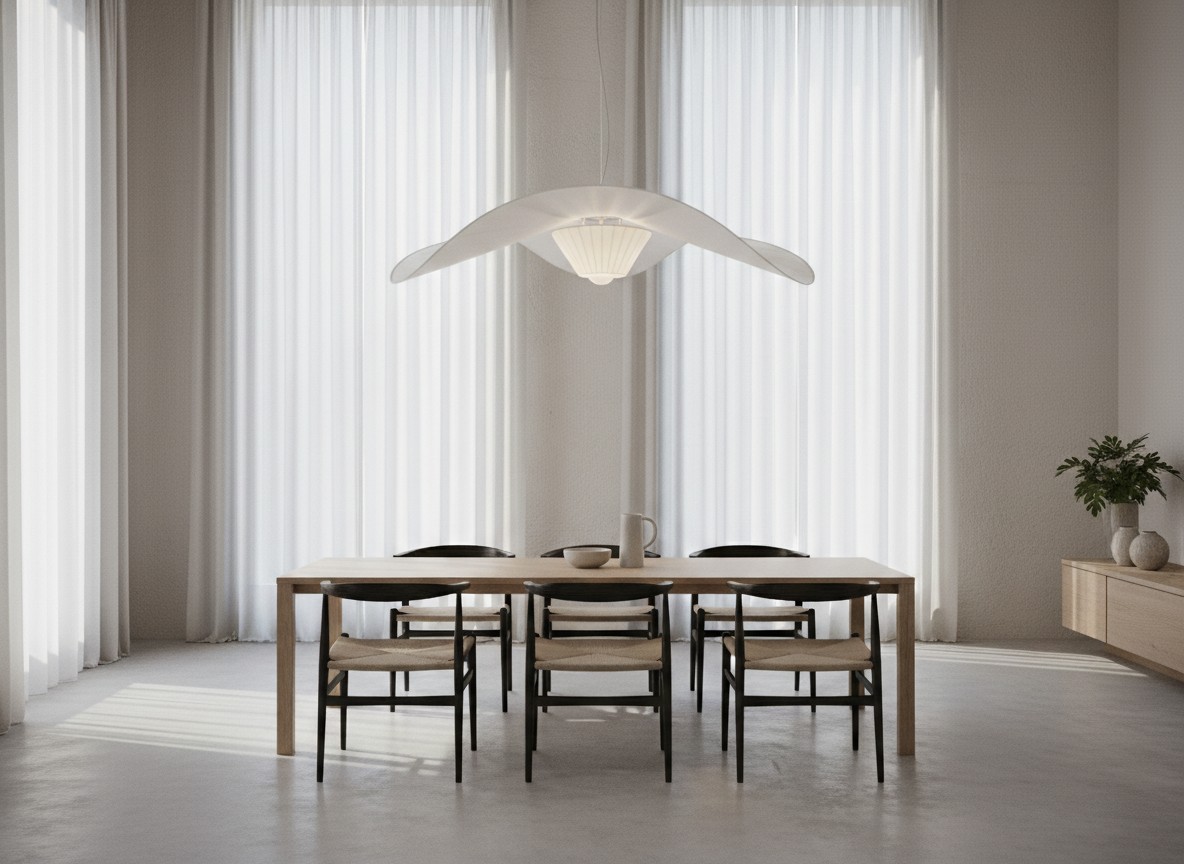
Few design mistakes are as glaring as a chandelier that's the wrong size for its space. Too small, and it looks insignificant, failing to anchor the room. Too large, and it overwhelms the table, creating visual imbalance and literal head-bumping hazards.
The good news? Getting chandelier sizing right isn't guesswork. Simple formulas and guidelines ensure your fixture complements your dining room perfectly, creating both functional lighting and beautiful aesthetics.
The Basic Sizing Formula
Start with this straightforward calculation that works for most dining rooms:
Chandelier Diameter Formula
Room Length (feet) + Room Width (feet) = Chandelier Diameter (inches)
Example: 12-foot long × 10-foot wide room = 22-inch diameter chandelier
This formula provides a chandelier size that's proportional to your room, creating visual balance without overwhelming or underwhelming the space.
Why This Formula Works
This calculation creates a fixture that relates properly to room volume. A small room gets an appropriately modest chandelier, while a grand space accommodates a statement piece. The math is simple, but the visual result is sophisticated.
However, this formula gives you a starting point, not an absolute rule. Other factors—table size, ceiling height, and fixture style—may adjust your final size choice.
Sizing Relative to Your Table
While room dimensions matter, your chandelier's relationship to the dining table is equally critical.
Chandelier Width Guidelines
Your chandelier should be one-half to two-thirds the width of your dining table.
Examples:
- 48-inch table → 24 to 32-inch chandelier
- 60-inch table → 30 to 40-inch chandelier
- 72-inch table → 36 to 48-inch chandelier
This range ensures the chandelier anchors the table without dominating it. Within this range, lean toward the larger size for more dramatic impact or the smaller size for subtle elegance.
Multiple Fixtures Over Long Tables
For tables exceeding 8 feet, consider multiple smaller fixtures rather than one oversized chandelier. This approach provides more even light distribution and contemporary visual interest.
Guidelines for multiple fixtures:
- Use two or three identical fixtures
- Space them evenly along the table length
- Each fixture should be one-half to two-thirds the table width
- Maintain consistent height above the table
Height Placement
Proper height is just as important as diameter. Too high, and the chandelier loses impact. Too low, and guests can't see across the table—or worse, they hit their heads standing up.
The Standard Rule
Hang your chandelier 30 to 36 inches above the table surface.
This range provides adequate clearance for sightlines and head room while keeping the fixture low enough to create intimacy and effectively illuminate the table.
Measure from the table top to the bottom of the chandelier—not the top of the fixture or the canopy.
Ceiling Height Adjustments
Standard 8-foot ceilings: 30 to 32 inches above table
9-foot ceilings: 33 to 36 inches above table
10-foot ceilings: 36 to 40 inches above table
Higher than 10 feet: Add 3 inches per foot of additional ceiling height
Adjusting for Fixture Style
Visual weight matters as much as actual dimensions:
Open, airy designs (wire frames, minimal crystals): Can hang slightly lower—toward the 30-inch mark—without feeling oppressive.
Dense, ornate designs (full crystal chandeliers, many layers): Hang higher—toward 36 inches or more—to prevent overwhelming the space.
Downward-facing designs (with visible bulbs pointing down): Hang higher to prevent glare at eye level when seated.
Room-Specific Considerations
Formal Dining Rooms
Traditional formal spaces often accommodate larger, more dramatic chandeliers. In these settings:
- Lean toward the larger end of the size range
- Choose fixtures with visual presence—crystals, multiple tiers, or substantial arms
- Consider the chandelier as a room statement, not just table lighting
Casual Dining Areas
Open-plan dining spaces or breakfast nooks work better with modest fixtures:
- Opt for the smaller end of the size spectrum
- Choose simpler designs that don't compete with nearby kitchens or living areas
- Consider how the fixture relates to adjacent lighting
Open Concept Spaces
When your dining area flows into other rooms without walls:
- Size the chandelier based on the dining zone, not the entire open space
- Coordinate style and finish with visible fixtures in adjacent areas
- Use the chandelier to define the dining zone within the larger space
Shape Matters
Chandelier shape should echo your table shape when possible.
| Table Shape | Recommended Chandelier | Why It Works |
|---|---|---|
| Round or Square | Round or square chandelier | Mirrors table geometry for cohesive look |
| Rectangular or Oval | Linear or oval chandelier | Echoes table proportions, distributes light evenly |
| Long Rectangular | Two or three smaller fixtures | Provides balanced light distribution |
However, this isn't absolute. A round chandelier can work beautifully over a rectangular table if sized properly, especially in eclectic or contemporary settings.
Style and Visual Weight
Two chandeliers with identical dimensions can feel very different in a space due to visual weight.
Lightweight Designs
Characteristics: Open frames, minimal materials, simple lines, glass or clear crystals
Effect: Feel smaller than their actual dimensions, work well in modest spaces
Sizing tip: Can size at the larger end of the range without overwhelming
Heavyweight Designs
Characteristics: Solid materials, many layers, dense crystal patterns, substantial metal arms
Effect: Command attention, feel larger than measurements suggest
Sizing tip: Size conservatively to avoid overpowering the space
The Clearance Rule
Beyond table relationship, consider walkway clearances:
Minimum 30 inches from chandelier edge to nearest wall or obstruction.
This ensures people can move around the table comfortably without bumping the fixture or feeling cramped. In very tight spaces, err on the smaller side of your size range.
Testing Before You Buy
Before purchasing, create a mockup:
- Cut paper: Use newspaper or craft paper to cut out your intended chandelier diameter
- Tape it up: Suspend it above your table at the planned height using painter's tape
- Live with it: Spend a few days eating meals and moving around the space
- Evaluate: Does it feel proportional? Does it clear walkways? Is the visual impact right?
This simple test prevents costly mistakes and gives you confidence in your measurements.
Common Sizing Mistakes
Ignoring ceiling height: Using the standard 30-36 inch range without adjusting for tall ceilings leaves chandeliers floating awkwardly high. Always adjust for ceiling height.
Choosing based on room dimensions alone: A mathematically "correct" size for your room might be too large for your actual table. Check both formulas.
Not accounting for visual weight: A delicate wire frame chandelier and a solid brass fixture of the same diameter will feel completely different in space.
Forgetting walkway clearance: A chandelier that works over the table but impedes movement around it is poorly sized for the space.
Mixing incompatible scales: A massive farmhouse table and a delicate mini chandelier look mismatched. Substantial furniture needs substantial lighting.
When to Break the Rules
Guidelines aren't laws. Consider diverging when:
You have an exceptionally tall ceiling: Very high ceilings (12+ feet) might warrant going larger than formulas suggest to maintain presence.
Your table is unusually small or large: A tiny bistro table might need a smaller chandelier than room dimensions suggest. A massive custom table might need something larger.
You're creating a specific effect: Intentionally oversized chandeliers can create drama in contemporary spaces. Undersized fixtures can feel intentionally minimal in modern settings.
You're using the dining table infrequently: If your table serves primarily as a design element, you can prioritize room proportions over table relationship.
Find Your Perfect Chandelier
Explore our curated collection of dining room chandeliers in every size and style. Free shipping on all orders.
Shop Chandeliers